











.png)
Ship engine rooms
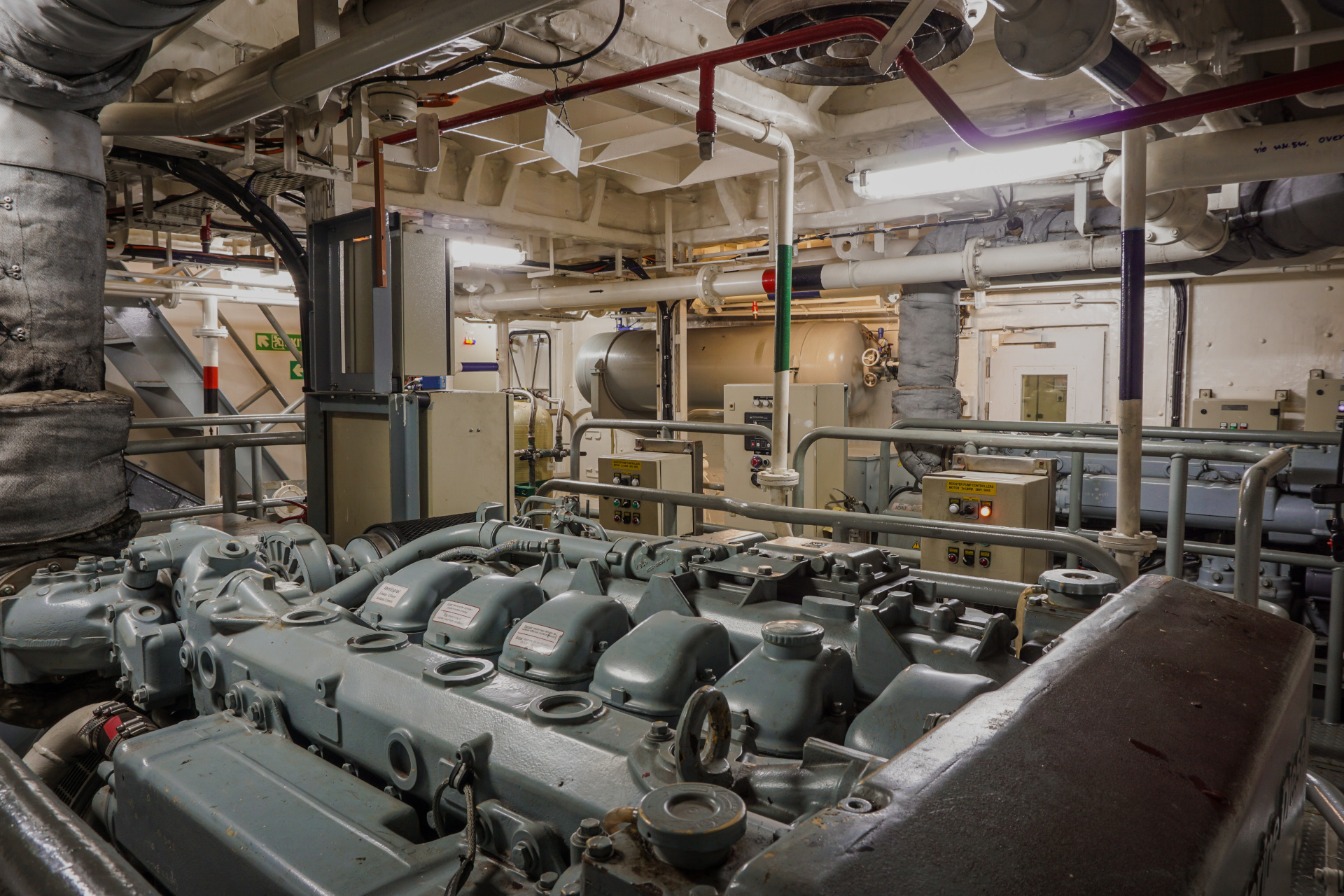
Fires on board vessels pose one of the greatest risks and challenges that can occur at sea.
Even a small fire can quickly escalate and lead to serious damage if not suppressed or controlled in time. The consequences of an uncontrolled fire can be devastating, including injury or loss of life to crew members, guests, damage to cargo, and significant damage to the vessel itself.
Fire Hazards for Marine Engine Rooms
The majority of fire incidents in marine engine rooms are caused by oil leakages, resulting from a system malfunction. Upon contact with hot engine parts and surfaces, flammable oils may ignite leading to a fire incident.
Inadequate insulation in marine engine rooms poses a fire risk by allowing intense engine heat to reach flammable materials, potentially causing spontaneous combustion. Excessive heat can also degrade equipment and wiring, leading to electrical faults and sparks that can trigger fires.
Electrical malfunctions in marine engines pose a fire risk by causing conditions like short circuits or overheating. These can generate sparks or increase ambient temperatures, igniting flammable substances. Overheating can also degrade wire insulation, leading to electrical arcs that can trigger fires.
Inadequate maintenance in marine engine rooms can lead to a higher risk of fire. Neglected maintenance can result in oil leaks, fuel system malfunctions, electrical issues, and overheating - all of which can become ignition sources. Furthermore, routine inspections and maintenance are essential to ensure that fire suppression systems are functioning correctly.
Fire Suppression Challenges
Space and weight limitations
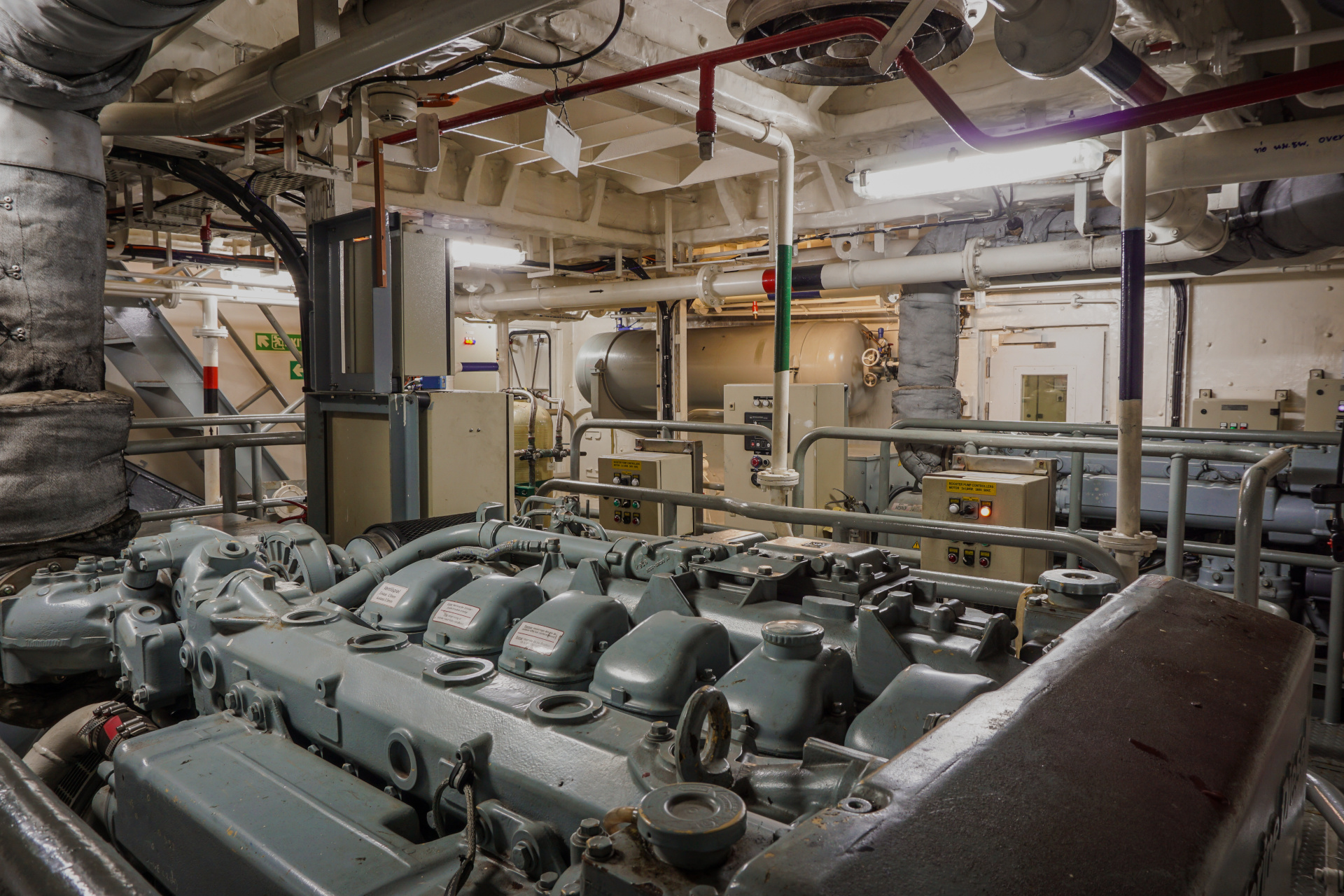
Engine rooms are typically one of the most confined spaces on board a vessel, with limited space for additional equipment or systems. This can make it challenging to install fixed fire suppression systems, particularly in older vessels where space limitations were not considered during the design phase.
Classes of fire
When the engine is in operation, the temperature of the engine and exhaust system can be so high that it can cause any fluids spilled onto its surfaces to ignite, without any external spark or flame. Marine engine rooms are subject to a combination of Class A combustible materials, Class B flammable liquids and gases, and Class C electrical equipment. Fire suppression systems must therefore be suitably certified for these classes of fire.
Advantages
Suitable for Electrical Panels
Our fire suppression technology is specifically designed to be suitable for electrical panels.
No Pipes or Nozzles
Our fire suppression technology is specifically designed to be suitable for electrical panels.
15-Year Product Life
Our fire suppression technology is specifically designed to be suitable for electrical panels.
Pressureless
Our fire suppression technology is specifically designed to be suitable for electrical panels.
Minimal Maintenance
Our fire suppression technology is specifically designed to be suitable for electrical panels.
Allowable Deviation of Small Openings in Enclosures
Our fire suppression technology is specifically designed to be suitable for electrical panels.
Easy and Fast Installation
Our fire suppression technology is specifically designed to be suitable for electrical panels.
Extreme Conditions (from -54 to +54 degrees Celsius)
Our fire suppression technology is specifically designed to be suitable for electrical panels.
Space and Weight Savings
Our fire suppression technology is specifically designed to be suitable for electrical panels.
Why FirePro.
Leakage
FirePro fire suppression technology is capable of handling small openings in the enclosure that can lead to agent loss.
Compactness
Thanks to their compact size, FirePro generators are an ideal solution for electrical cabinets, as they can fit inside the panel, providing direct protection. The smallest generator in the FirePro series has dimensions of 32 mm (diameter) and 180 mm (height).
Easy to install in new or retrofit projects.
FirePro generators are an "all-in-one" container and are equivalent to the agent storage tank, piping, and nozzles of a pressurized gas system. They are installed directly in the hazard enclosure, without the need for additional space for the system.