











.png)
Energy Storage Systems
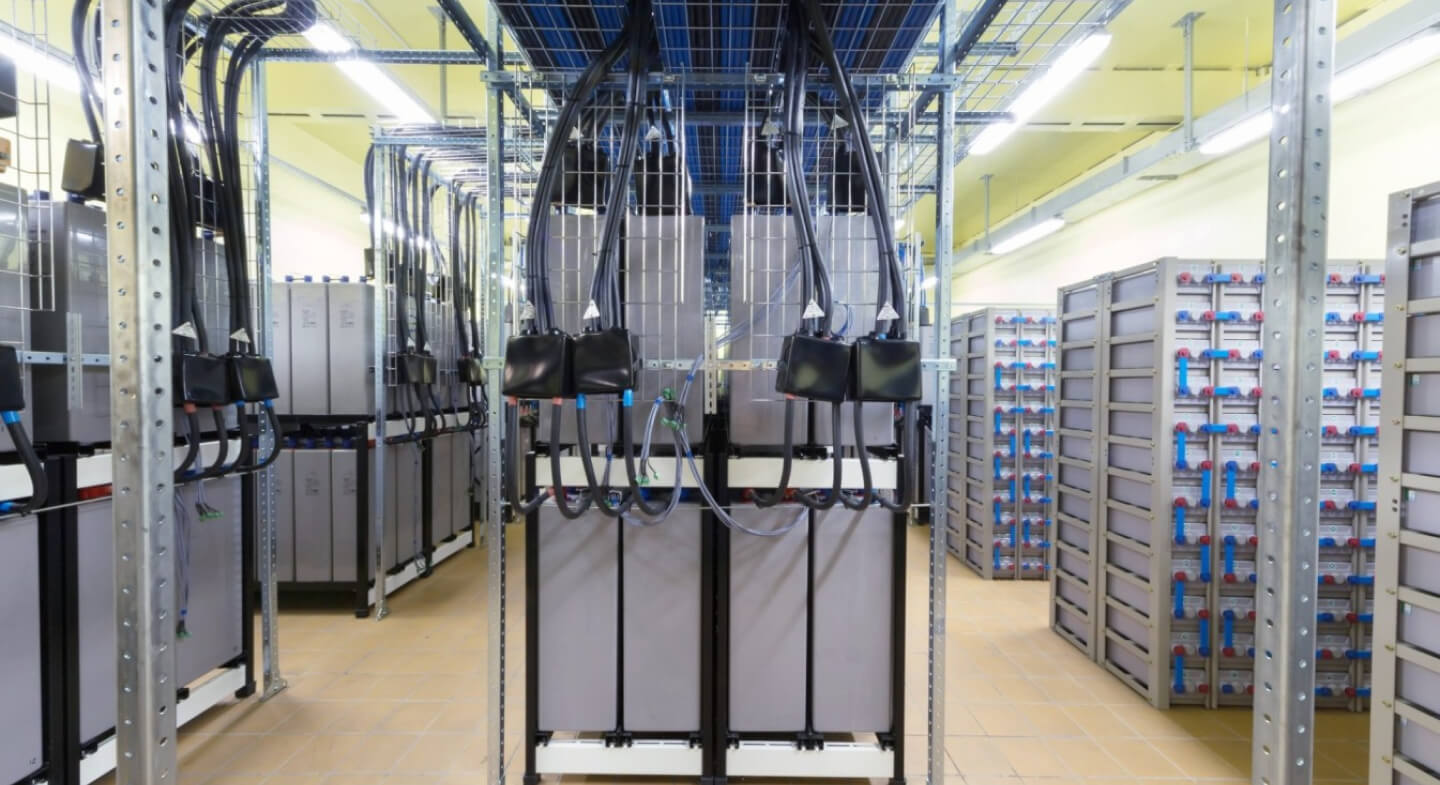
FirePro technology has successfully proven its efficiency and effectiveness in suppressing Li-Ion battery fires in more than 100 tests carried out over the past 7 years by accredited laboratories and prominent Li-Ion battery manufacturers.
Technological advancements in the chemistry, configuration, materials, and management systems of Li-Ion batteries, have contributed towards increased efficiency and safety.
Despite these advancements, Li-Ion batteries still pose a significant fire hazard. A single defective cell, or one that has been subjected to mechanical, electrical, or thermal abuse, may lead to an increase in its internal temperature, triggering a thermal runaway. The resulting fire will develop within minutes and can propagate to neighbouring cells if not suppressed and controlled on time.
Li-ion battery fire suppression challenges
Heat Output In the scenario where the Li-Ion batteries have entered an advanced thermal propagation stage, the battery will generate its own heat, making it difficult to cool down fast enough.
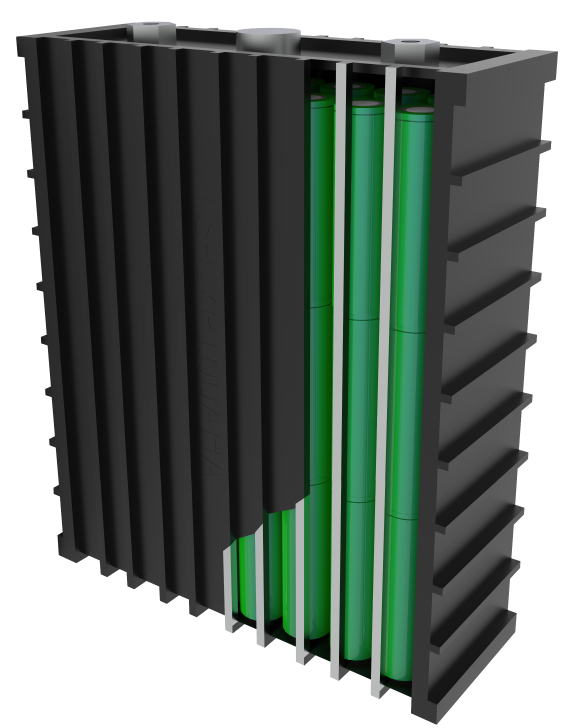
Battery Pack Li-Ion battery cells are densely stored in their packs making it hard for a fire suppression agent to reach the fire.
Oxygen Supply The production of oxygen during electrolyte decomposition supports the chemical processes that occur during a fire.
How it works
Chemical Chain Reaction
FirePro Condensed Aerosol suppresses fire by interrupting the chemical chain reactions that occur in the flame, rather than by cooling and/or depleting oxygen in the enclosure.
Activation
Upon activation, the condensed aerosol forming compound transforms from a solid state into a rapidly expanding two-phased fire suppression agent; consisting of Potassium Carbonate solid particles K2CO3 (the active agent) suspended in a carrier gas. When the condensed aerosol reaches and reacts with the flame, the Potassium radicals (K*) are formed mainly from the dissociation of K2CO3. The K*s bind to other flame free radicals (hydroxyls OH-) forming stable products such as KOH. KOH then further reacts in the presence of CO2 and forms stable K2CO3.
Li-ion Battery fire
In the event of a Li-Ion battery fire, both the active agent K2CO3 and the intermediate product KOH react with the electrolyte’s decomposition products, such as Hydrogen Fluoride (HF), forming stable products such as Potassium Fluoride (KF) and Potassium Bifluoride (KHF2). Thus, preventing the formation of highly flammable gases such as Hydrogen (H2). The resulting neutralizing action ultimately controls the fire and allows the temperature in the enclosure to drop below the threshold necessary (~120°C) for thermal runaway to sustain itself.
Test Results
Test results have shown that FirePro can protect the enclosure against reignition for as long as the minimum required fire suppression density is maintained, allowing time for post-fire management of the battery.
Advantages
Suitable for Electrical Panels
Our fire suppression technology is specifically designed to be suitable for electrical panels.
No Pipes or Nozzles
Our fire suppression technology is specifically designed to be suitable for electrical panels.
15-Year Product Life
Our fire suppression technology is specifically designed to be suitable for electrical panels.
Pressureless
Our fire suppression technology is specifically designed to be suitable for electrical panels.
Minimal Maintenance
Our fire suppression technology is specifically designed to be suitable for electrical panels.
Allowable Deviation of Small Openings in Enclosures
Our fire suppression technology is specifically designed to be suitable for electrical panels.
Easy and Fast Installation
Our fire suppression technology is specifically designed to be suitable for electrical panels.
Extreme Conditions (from -54 to +54 degrees Celsius)
Our fire suppression technology is specifically designed to be suitable for electrical panels.
Space and Weight Savings
Our fire suppression technology is specifically designed to be suitable for electrical panels.
Why FirePro.
Leakage
FirePro fire suppression technology is capable of handling small openings in the enclosure that can lead to agent loss.
Compactness
Thanks to their compact size, FirePro generators are an ideal solution for electrical cabinets, as they can fit inside the panel, providing direct protection. The smallest generator in the FirePro series has dimensions of 32 mm (diameter) and 180 mm (height).
Easy to install in new or retrofit projects.
FirePro generators are an "all-in-one" container and are equivalent to the agent storage tank, piping, and nozzles of a pressurized gas system. They are installed directly in the hazard enclosure, without the need for additional space for the system.